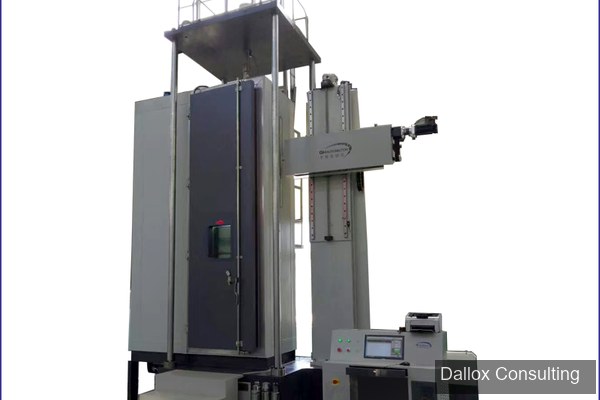
Technical Specifications
| Parameter | Specification |
|---|---|
| Temperature Range | -40 to +150 deg C |
| Mechanical Load | Up to 500 kN (simultaneous with thermal) |
| Temperature Ramp Rate | 0.5-5 deg C/min |
| Cycle Count | Up to 9999 programmable |
| Chamber Type | Walk-in with viewing window |
| Applicable Standards | IEC 61109, IEC 60383, IEC 61952 |
Key Features
- Simultaneous mechanical load and temperature cycling — tests real service conditions
- Walk-in environmental chamber with internal LED lighting
- Multi-zone temperature control for uniformity across long specimens
- Programmable multi-step profiles for complex test sequences
- Continuous data logging of load, temperature, displacement and leakage current
Thermal-Mechanical Testing per IEC 61109
IEC 61109 requires composite insulators to undergo thermal-mechanical testing as a sample test. The insulator is subjected to a 96-hour cycle: 24 hours at -25 plus or minus 5 deg C then 24 hours at +40 plus or minus 5 deg C, repeated, while under a specified mechanical load (typically 50% of SML). This verifies that differential thermal expansion between core rod, housing, and end fittings does not cause mechanical degradation.
Importance for Porcelain Insulators
For porcelain insulators per IEC 60383, thermal-mechanical testing verifies that the cement joint between porcelain body and metal cap/pin maintains integrity through temperature cycles. Thermal expansion mismatch between porcelain, cement, and metal can cause micro-cracking and eventual mechanical failure if not properly designed.
Looking for This Equipment?
Contact Contune International for detailed quotations, delivery timelines, and technical support on insulator test and production machinery.
Request a Quote →