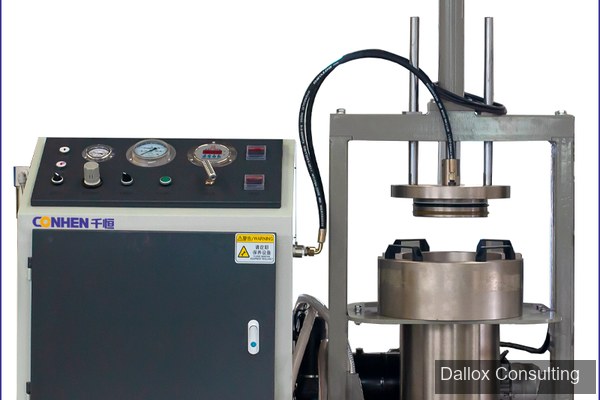
Technical Specifications
| Parameter | Specification |
|---|---|
| Test Method | Pressurized fuchsin dye penetration |
| Pressure | 15-20 MPa |
| Pressure Duration | 1 hour minimum |
| Specimen Type | Ceramic insulator fragments |
| Dye | Fuchsin in alcohol solution |
| Applicable Standards | IEC 60383, ANSI C29.1, GB/T 775 |
Key Features
- High-pressure chamber with safety interlock
- Clear acrylic window for visual observation
- Precise pressure control with digital gauge
- Fuchsin dye containment system for safe handling
- Post-test specimen sectioning and inspection area
The Porosity Test — Non-Negotiable for Ceramic Insulators
Porosity testing verifies that the ceramic insulator body is fully vitrified and free of interconnected pores. A porous insulator can absorb moisture, which drastically reduces its dielectric strength and leads to puncture failure. The fuchsin dye penetration test is a simple but effective pass/fail quality control check.
How the Test Works
Per IEC 60383, fragments of the ceramic insulator are immersed in a fuchsin dye solution under 15-20 MPa pressure for at least one hour. After depressurization, the fragments are broken and the fracture surfaces examined. Any dye penetration beyond the immediate surface indicates porosity — the insulator fails the test.
Looking for This Equipment?
Contact Contune International for detailed quotations, delivery timelines, and technical support on insulator test and production machinery.
Request a Quote →